
Last Updated: March 2026 | Peer Reviewed by The PCC Research Team


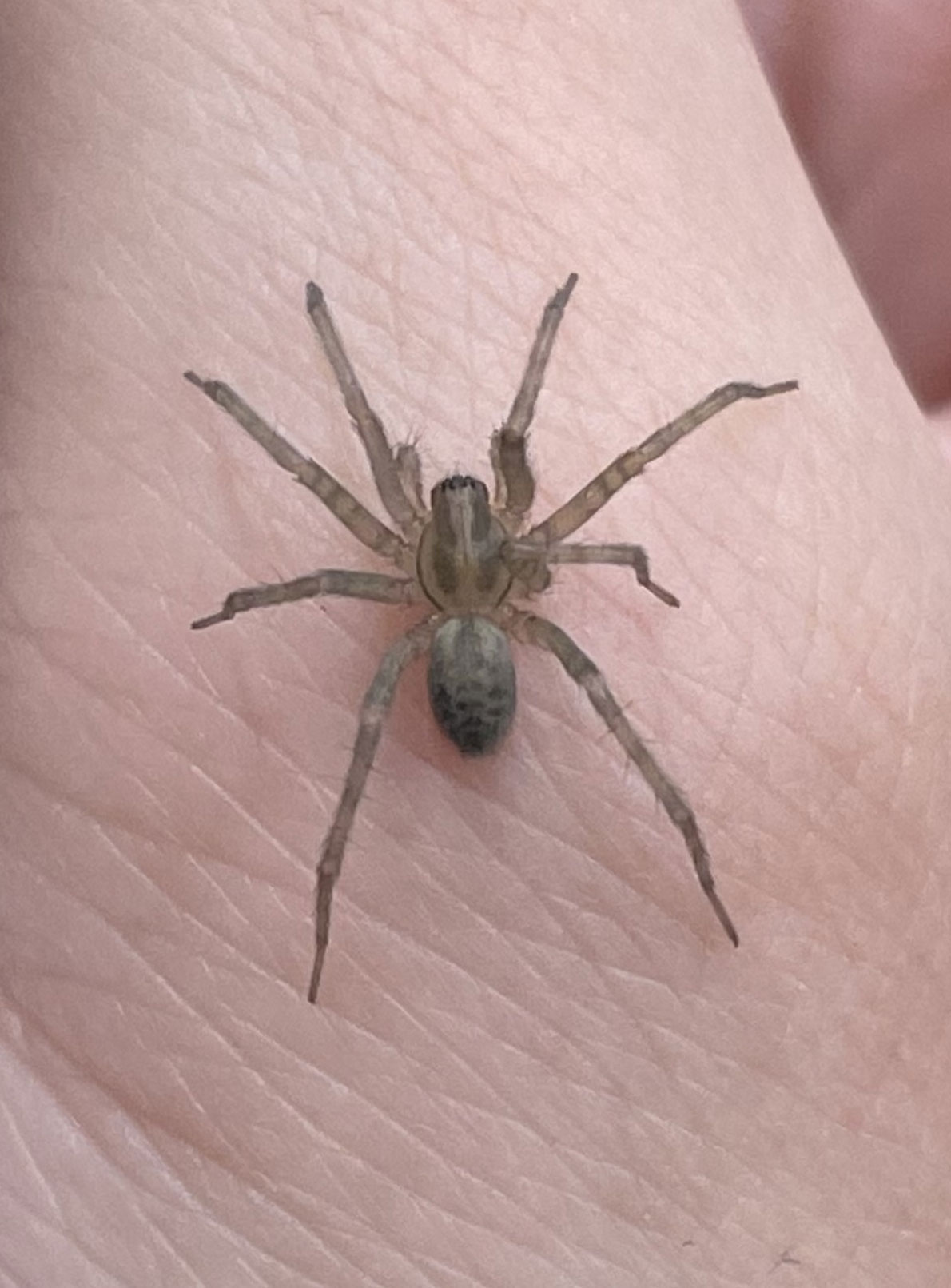
The Common House Spider (Tegenaria domestica), frequently referred to as the Barn Funnel Weaver, is one of the most widespread spider species encountered by homeowners in California. Known for their distinctive funnel-shaped webs, these spiders are the primary culprits behind thick, sheet-like cobwebs found in basements, crawlspaces, and dark corners.
While their rapid movements and somewhat hairy appearance can startle residents, they are highly reclusive and perfectly adapted to living quietly alongside humans, preying on a wide variety of indoor nuisance insects.
1. How to Identify a Barn Funnel Weaver
Because “house spider” is a generic term often misused for many different species, identifying Tegenaria domestica relies on looking at both its physical markings and its unique web architecture:
- The Web Structure: The most defining characteristic is the web. They build a flat, horizontal “sheet” of silk that ends in a tubular retreat or funnel. The spider waits inside this funnel for an insect to land on the sheet, then darts out rapidly to capture it.
- Coloration & Markings: Their bodies are typically earth-toned, ranging from pale brown to dark grey. The abdomen usually features a distinct herringbone or chevron pattern composed of darker bands.
- Legs: Their legs are noticeably long, spindly, and covered in fine hairs. The legs are usually banded with slightly darker stripes.
- Body Shape: Like all members of the funnel-weaver family (Agelenidae), they have an elongated, oval-shaped abdomen and a somewhat flattened profile, which helps them navigate tight crevices.
Tegenaria domestica is entirely harmless to humans and pets. Their fangs are generally too small to effectively penetrate human skin. Even in the rare event of a bite (usually due to being trapped inside clothing), the venom is weak and causes nothing more than minor, temporary redness. They are incredibly shy and will always choose to retreat deep into their funnel rather than defend their web.
2. California Distribution & Habitats
Originally from Europe, the Common House Spider has established itself globally. In California, their populations thrive year-round indoors due to climate control.
- Indoor Hotspots: They prefer dark, undisturbed areas with minimal foot traffic. Look for their funnel webs in basements, crawlspaces, attics, behind heavy furniture, and in the upper corners of seldom-used closets.
- Outdoor Hotspots: Outside, they frequent sheds, barns, detached garages, retaining walls, and dense ivy or ground cover near the home’s foundation.
- Moisture Needs: While adaptable, they favor slightly humid micro-environments. High populations in basements often indicate elevated moisture levels or water leaks that are also attracting the insects they feed on.
3. DIY Control & Prevention Strategies
Total eradication is rarely necessary and highly difficult to maintain. The goal with Tegenaria domestica is population management and physical exclusion. If you remove the webs and the food source, the spiders will not stick around.
- Mechanical Disruption: Use a vacuum cleaner with a crevice tool to routinely suck up their sheet webs and funnels. Because they invest significant energy into building these webs, repeated disruption will force them to relocate.
- Moisture Control: Run a dehumidifier in basements and ensure proper ventilation in crawlspaces to make the environment less hospitable to both the spiders and their prey (like silverfish and pillbugs).
- Sealing Entry Points: Apply caulk around window frames, baseboards, and pipe penetrations under sinks where spiders migrate between wall voids and living spaces.
- Reduce Storage Clutter: Store seasonal items in tightly sealed plastic totes rather than cardboard boxes, which provide excellent structural anchors for funnel webs.
4. Recommended Control Products
For high-density populations in garages or basements, a combination of monitoring traps and residual barriers can significantly reduce their numbers.
Glue Board Traps
The best tool for capturing wandering males searching for mates along baseboards.
View Catchmaster ReviewPerimeter Sprays
Provides a residual barrier around doors, windows, and basement perimeters.
View Hot Shot ReviewDesiccant Dusts
Highly effective for long-term control when puffed into wall voids and behind siding.
View Dusting Guide5. When to Call a Professional Exterminator
If you are experiencing a severe infestation that cannot be managed by vacuuming and basic sealing, or if the sheer volume of webs in a commercial space, warehouse, or rental property is causing structural or aesthetic concerns, consulting a professional is recommended.
Find Local Professional Pest Control
Visit the Pest Control California directory to check pricing and find a verified, licensed exterminator serving your specific city and zip code for thorough web removal and structural treatments.
View California Directory →6. Frequently Asked Questions
Q: Is the Barn Funnel Weaver the same as the Hobo Spider?
A: They are closely related (both belong to the funnel-weaver family) and look very similar, but they are different species. Hobo Spiders (Eratigena agrestis) are larger and less common indoors in California. Regardless, neither species is considered medically dangerous.
Q: Why do I find big brown spiders running across my floor at night?
A: While the females stay inside their funnel webs, male house spiders are nomadic. During the late summer and fall mating season, males actively leave their webs to roam across floors and baseboards searching for females.
Q: How long do Common House Spiders live?
A: In the wild, their lifespan is generally a year. However, inside the climate-controlled, predator-free environment of a human home, female house spiders can live for up to seven years.